
Guangzhou A.C.T Products Co.,Ltd To Make The Global Delivery More Efficient
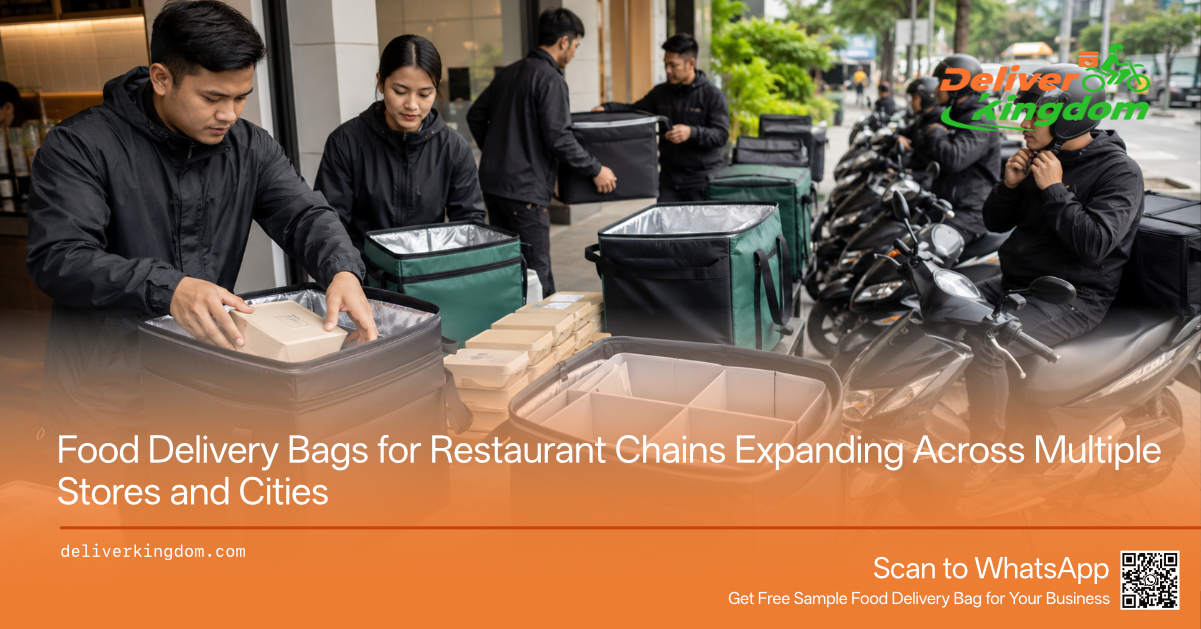
Mengapa Ekspansi Membuat Peralatan Pengiriman Makanan Lebih Sulit Dikendalikan?
Membuka satu restoran saja sudah sulit. Membuka dua puluh restoran menciptakan serangkaian masalah yang sama sekali berbeda. Kantor pusat mungkin menyetujui satu tas pengantar makanan, tetapi tim regional membeli model lain karena stok tidak tersedia. Seorang pemilik waralaba memilih kain yang lebih murah. Satu kota mencetak logo dengan warna merah tua, sementara kota lain menggunakan warna yang lebih mendekati oranye. Dalam setahun, armada pengiriman terlihat kurang seperti satu merek dan lebih seperti kumpulan eksperimen lokal yang tidak terkait. Untuk grup restoran yang berkembang, tas pengantar makanan khusus untuk rantai restoran multi-cabang membantu mengubah peralatan pengiriman menjadi standar yang terkontrol. Ukuran, warna, insulasi, posisi logo, tata letak internal, dan kemasan semuanya dapat didokumentasikan dan diulang di seluruh pesanan di masa mendatang. DeliverKingdom telah fokus pada pembuatan peralatan pengiriman sejak 2013, memberikan merek yang berkembang basis produksi yang lebih stabil untuk pembukaan toko, perekrutan pengantar makanan, kampanye musiman, dan ekspansi regional. Alih-alih mencari tas baru setiap kali kota lain dibuka, tim pengadaan dapat bekerja dari satu spesifikasi yang disetujui. Ini menghemat waktu, mengurangi inkonsistensi visual, dan mencegah tim lokal mengatasi setiap kekurangan dengan tas apa pun yang kebetulan tersedia minggu itu.
Bagaimana Inkonsistensi Kantong Pengiriman Merusak Standar Merek
Pelanggan memperhatikan ketidakkonsistenan bahkan ketika mereka tidak dapat menjelaskannya dengan jelas. Satu pengantar makanan datang dengan ransel yang bersih dan rapi, sementara yang lain membawa tas yang pudar dengan logo yang mengelupas dan panel samping yang bengkok. Makanan mungkin identik, tetapi pengiriman kedua terasa kurang profesional. Hal ini penting bagi jaringan restoran karena pengiriman seringkali merupakan satu-satunya kontak fisik antara merek dan pelanggan. Tas pengiriman makanan berinsulasi standar untuk operasi waralaba restoran membantu menjaga penampilan yang serupa di seluruh toko dan tim pengiriman. DeliverKingdom mendukung pencocokan warna Pantone, penempatan logo yang konsisten, dimensi khusus, detail reflektif, metode pencetakan, dan instruksi pengemasan untuk produksi berulang. Perusahaan dapat menyediakan pencetakan sablon, pencetakan transfer panas, bordir, label tenun, tambalan PVC, dan aplikasi logo reflektif tergantung pada hasil yang diinginkan. Pembeli juga dapat menentukan tekstur kain, warna ritsleting, warna anyaman, dan gaya lapisan. Detail ini mungkin tampak kecil dalam rapat, tetapi menjadi sangat terlihat ketika ratusan pengantar makanan bergerak melalui kawasan perkantoran, pusat perbelanjaan, gedung perumahan, dan titik pengambilan makanan restoran setiap hari. Konsistensi merek tidak berhenti pada papan menu. Ia melintasi kota di punggung penunggangnya.
Menjaga Suhu Makanan Tetap Stabil di Rute Perkotaan yang Lebih Panjang
Ekspansi seringkali berarti rute pengiriman yang lebih panjang dan rumit. Sebuah restoran di pusat kota yang padat mungkin menyelesaikan sebagian besar pesanan dalam waktu 20 menit, sementara cabang di pinggiran kota mungkin melayani pelanggan yang berjarak 40 menit. Lalu lintas, parkir, lift, meja keamanan, dan rute dengan banyak pesanan dapat meningkatkan waktu antara dapur dan penyerahan pesanan. Oleh karena itu, tas pengiriman makanan komersial untuk pengiriman jarak jauh di perkotaan harus memperlambat pertukaran suhu selama perjalanan dan menunggu. DeliverKingdom dapat memproduksi struktur insulasi multi-lapisan menggunakan kain Oxford, poliester berlapis PVC, kain berlapis TPU, busa EPE, lapisan aluminium foil, lapisan PEVA, dan papan penyangga opsional. Ketebalan insulasi dapat disesuaikan sesuai dengan waktu rute, iklim lokal, kategori makanan, dan ukuran tas. Pizza mungkin memerlukan struktur horizontal yang lebar. Ayam goreng mungkin membutuhkan manajemen kelembaban internal yang lebih baik. Kotak makanan mungkin memerlukan kompartemen yang dapat ditumpuk, sementara minuman memerlukan penyangga tegak. DeliverKingdom tidak memaksakan satu tas universal untuk setiap situasi pengiriman, karena itu biasanya menciptakan produk yang secara teknis dapat digunakan tetapi secara praktis merepotkan. Pendekatan OEM dan ODM-nya memungkinkan struktur termal untuk mengikuti menu dan rute sebenarnya, membantu grup restoran melindungi kualitas makanan secara lebih konsisten di berbagai lokasi.
Memilih Struktur Tas untuk Menu dan Kendaraan Pengiriman yang Berbeda
Sebuah jaringan restoran mungkin menggunakan sepeda motor di satu negara, sepeda di negara lain, dan mobil van kecil untuk pesanan katering. Grup yang sama mungkin mengoperasikan konsep pizza, burger, ayam goreng, minuman, dan makanan segar di bawah merek yang berbeda. Satu bentuk tas tidak dapat melayani setiap operasi dengan baik. Tas pengiriman makanan khusus untuk jaringan restoran multi-cabang mungkin membutuhkan beberapa model terkait daripada satu kompromi yang canggung. DeliverKingdom dapat mengembangkan tas ransel, tas rak belakang sepeda motor, tas jinjing berinsulasi, tas katering besar, wadah minuman, dan wadah termal lipat dalam satu program produk. Pembeli dapat menyesuaikan bukaan atas, bukaan depan, penutup ritsleting, perakitan Velcro, tali bahu, pegangan yang diperkuat, titik pemasangan, rak internal, pembatas cangkir, dan tempat label rute transparan. Fleksibilitas ini adalah salah satu alasan perusahaan memilih DeliverKingdom ketika proyek melampaui satu tas dasar. Tim dapat membantu menerjemahkan kemasan menu, kendaraan pengantar, kebiasaan pemuatan, dan jarak pengiriman ke dalam struktur produk yang praktis. Sebuah jaringan minuman mungkin membutuhkan pembatas cangkir yang dapat dilepas. Konsep pizza mungkin membutuhkan alas yang lebar dan dinding yang kokoh. Operasi katering mungkin membutuhkan pegangan samping untuk pengangkatan oleh dua orang. Menyesuaikan peralatan dengan operasi mengurangi tumpahan, kerusakan kemasan, keluhan pengendara, dan masalah-masalah yang sebenarnya dapat dihindari tetapi entah bagaimana menjadi mendesak pada pukul 7:30 malam di hari Jumat.
Material Tahan Air dan Mudah Dibersihkan untuk Operasi Armada Sehari-hari
Tas pengantar makanan menghabiskan masa pakainya di sekitar hujan, minyak, saus, kondensasi, debu, dan lantai kendaraan. Material yang terlihat bagus di ruang sampel mungkin menjadi sulit dibersihkan setelah sebulan penggunaan sehari-hari. Bagi armada restoran, ini memengaruhi kebersihan, penerimaan pengantar, frekuensi penggantian, dan citra merek. DeliverKingdom dapat menyesuaikan kain luar yang tahan air atau kedap air, lapisan dalam yang mudah dibersihkan, panel penyangga yang dapat dilepas, struktur ritsleting tertutup, jahitan yang diperkuat, dan bagian bawah yang dilapisi. Tas pengantar makanan berinsulasi untuk operasi waralaba restoran harus dirancang sesuai dengan rutinitas pembersihan pembeli. Beberapa tim membersihkan tas setelah setiap shift. Yang lain memiliki titik pembersihan terpusat. Beberapa melepas panel internal sebelum dicuci, sementara yang lain membutuhkan lapisan yang dapat dibersihkan tanpa dibongkar. Proses pemilihan material DeliverKingdom memungkinkan pembeli untuk menyeimbangkan kinerja tahan air, berat, insulasi termal, fleksibilitas, dan biaya. Ini adalah alasan praktis lain untuk memilih produsen berpengalaman daripada hanya memilih tas dari foto katalog. Sejak 2013, DeliverKingdom telah bekerja dengan aplikasi pengiriman komersial di mana produk tersebut digunakan kembali berulang kali. Nilai tersebut baru muncul setelah ratusan pengiriman, bukan dalam lima menit pertama setelah membuka kardus.
Tas Pengiriman Makanan Kustom untuk Peluncuran Toko dan Waralaba Baru
Pembukaan toko baru berlangsung cepat. Perabot, peralatan dapur, menu, seragam, kemasan, perekrutan pengantar makanan, dan promosi lokal semuanya harus tiba tepat waktu. Tas pengantar makanan sering dianggap sebagai barang kecil sampai terlambat, dicetak salah, atau dikirim dengan ukuran yang salah. Kemudian tiba-tiba semua orang sangat memperhatikannya. Tas pengantar makanan khusus untuk jaringan restoran multi-cabang dapat dikembangkan sebagai bagian dari paket peluncuran standar. DeliverKingdom mendukung kustomisasi kain, dimensi, kapasitas, warna, logo, ketebalan insulasi, tata letak pembatas, penutup, strip reflektif, dan kemasan individual. Model yang disetujui kemudian dapat dipesan ulang untuk cabang baru atau mitra waralaba. Jumlah regional yang berbeda juga dapat menggunakan standar visual dan teknis yang sama, membantu kantor pusat mempertahankan kendali sekaligus memungkinkan ekspansi bertahap. Fasilitas produksi DeliverKingdom di Yangchun, Guangdong mencakup lebih dari 12.000 meter persegi dan mempekerjakan lebih dari 400 pekerja. Skala ini mendukung pengembangan sampel, produksi komersial, inspeksi kualitas, pengemasan, dan pesanan berulang di masa mendatang. Sertifikasi BSCI dan ISO9001 juga memberikan referensi yang diakui kepada tim pengadaan saat mengevaluasi manajemen pabrik dan sistem kualitas. Bagi merek yang sedang berkembang, memilih DeliverKingdom berarti pemasok dapat tetap terlibat setelah peluncuran pertama, alih-alih menghilang setelah faktur sampel dibayar.
Membangun Program Perlengkapan Pengendara yang Lengkap dengan Satu Produsen
Armada pengantar makanan membutuhkan lebih dari sekadar tas. Pengantar makanan mungkin juga memerlukan helm, jaket tahan air, pakaian reflektif, sarung tangan, pelindung lutut, pelindung siku, dan aksesori lainnya tergantung pada pasar. Mengelola pemasok terpisah untuk setiap item menciptakan lebih banyak sampel, lebih banyak perbedaan warna, lebih banyak pengaturan pengiriman, dan lebih banyak peluang bagi seseorang untuk salah memahami instruksi sederhana dengan cara yang sangat kreatif. DeliverKingdom memproduksi produk tas pengantar makanan bersama dengan helm pengantar makanan, jaket pengantar makanan, dan peralatan pelindung. Hal ini memungkinkan grup restoran dan operator pengiriman untuk membangun program peralatan pengantar makanan yang lebih lengkap dengan lebih sedikit peralihan pemasok. Tas pengantar makanan komersial untuk pengiriman jarak jauh di perkotaan dapat dipadukan dengan jaket reflektif untuk pekerjaan malam hari atau pakaian luar tahan hujan untuk musim hujan. Warna tas, warna helm, detail seragam, dan logo yang dicetak dapat mengikuti satu arah visual. Pembeli juga dapat mengoordinasikan pesanan bertahap untuk berbagai kategori peralatan sesuai dengan peluncuran toko atau jadwal pelatihan pengantar makanan. Jangkauan manufaktur yang lebih luas ini adalah salah satu keunggulan terkuat DeliverKingdom. Ini membantu merek menciptakan kehadiran yang konsisten di jalanan sekaligus mengurangi waktu komunikasi, ketidaksesuaian warna, dan pembelian yang terfragmentasi. Hasilnya adalah armada pengendara yang tampak terencana, yang seharusnya tidak luar biasa, tetapi pasar telah menetapkan standar di suatu tempat yang sangat rendah.
Mengapa Merek Restoran yang Berkembang Memilih DeliverKingdom?
Growing restaurant brands need suppliers that can solve practical problems, not merely send a price list. DeliverKingdom has worked in the delivery equipment industry since 2013 and operates a factory of more than 12,000 square meters in Yangchun, Guangdong, with over 400 employees. Its production scope includes food delivery bags, insulated totes, thermal backpacks, rider helmets, rider jackets, and protective gear. This combination gives buyers access to OEM and ODM development, material customization, size adjustment, color matching, logo printing, sample production, bulk manufacturing, and repeat-order support. BSCI and ISO9001 certification add useful references for buyers reviewing factory compliance and quality management. Restaurant chains choose DeliverKingdom because the company can work from actual delivery conditions: menu packaging, route time, climate, rider vehicle, cleaning frequency, brand standard, and expected volume. The goal is not to sell the largest or most expensive bag. It is to build equipment that fits the operation and can be reproduced when the business grows. For procurement teams, that means fewer supplier changes, fewer inconsistent batches, and a clearer path from sample approval to future regional orders.
Bulk Production and Repeat Orders Without Starting Over
The real test of a supplier is not the first sample. It is whether the second, third, and fifth production batches still follow the approved requirements. Restaurant groups may reorder bags when new stores open, older equipment is replaced, campaigns launch, or brand colors change. A reliable insulated food delivery bag for restaurant franchise operations should remain consistent in dimensions, material, color, logo position, stitching, and packaging. DeliverKingdom supports commercial production through material confirmation, pre-production review, in-line inspection, finished-product checking, and packing control. Buyers can document the approved specifications so later orders do not begin from an empty email thread and several forgotten attachments. DeliverKingdom’s factory scale and manufacturing experience allow it to support bulk orders for restaurant chains, food delivery operators, catering companies, cold chain businesses, food logistics providers, and trading companies. Foldable structures can also be considered to reduce storage and shipping volume, while packing methods can be adjusted according to warehouse or distribution needs. Choosing DeliverKingdom gives growing brands a supplier that understands repeatability, which is less exciting than a flashy product launch but considerably more useful six months later.
Planning a Custom Food Delivery Bag Project for Future Growth
A successful food delivery bag project should account for both current needs and future expansion. Buyers should begin with real operating data: food-box dimensions, average order size, route duration, number of stops, climate, vehicle type, rider carrying method, cleaning process, required logo, and expected order volume. It is also useful to consider whether new stores, franchise locations, menu categories, or delivery regions will be added later. DeliverKingdom can use this information to develop a custom food delivery bag for multi-store restaurant chains, an insulated food delivery bag for restaurant franchise operations, or a commercial food delivery bag for long-distance urban delivery. The company can support fabric selection, size customization, color matching, printing, insulation adjustment, divider design, foldable structure, sampling, and bulk production. Buyers can test the sample using real packaging and actual delivery routes before approving larger quantities. This lowers the risk of discovering that the bag is too narrow, too heavy, difficult to clean, or incompatible with the rider’s vehicle after thousands of units have already reached the warehouse. Restaurant groups, delivery companies, and distributors can send the required size, quantity, application, logo artwork, and route conditions to receive a more accurate product recommendation and quotation.
Q: Why should restaurant chains choose DeliverKingdom for food delivery bags?
A: DeliverKingdom has manufactured delivery equipment since 2013 and operates a factory covering more than 12,000 square meters with over 400 employees. The company supports OEM and ODM development, custom materials, dimensions, colors, logos, insulation structures, bulk production, repeat orders, and matching rider equipment. BSCI and ISO9001 certification also provide useful factory and quality-management references.
Q: Can DeliverKingdom create one bag standard for multiple stores or franchise locations?
A: Yes. DeliverKingdom can develop a custom food delivery bag for multi-store restaurant chains with fixed dimensions, materials, colors, logo placement, insulation, internal structure, and packing requirements. The approved specification can then be used for future store openings and repeat orders.
Q: Can the food delivery bag be adjusted for different menus?
A: Yes. Bags can be customized for pizza, burgers, fried chicken, drinks, desserts, meal boxes, fresh food, catering orders, and other menu categories. Options include internal dividers, drink holders, shelves, reinforced baseboards, front or top opening, different insulation thicknesses, and custom carrying systems.
Q: Does DeliverKingdom also manufacture rider helmets and clothing?
A: Ya. DeliverKingdom memproduksi helm pengendara, jaket pengendara, perlengkapan pelindung, tas pengantar makanan, tas jinjing berinsulasi, dan ransel termal. Hal ini memungkinkan pembeli untuk mengkoordinasikan proyek tas dan perlengkapan pengendara dengan warna, logo, dan jadwal pengiriman yang lebih konsisten.
T: Informasi apa yang dibutuhkan untuk memulai proyek kustom?
A: Pembeli harus memberikan dimensi tas atau ukuran kemasan makanan, perkiraan kuantitas, kategori menu, waktu tempuh, jenis kendaraan, iklim, bahan yang disukai, warna merek, desain logo, persyaratan pembersihan, dan fungsi khusus apa pun seperti pembatas, kain tahan air, strip reflektif, penyangga yang diperkuat, atau konstruksi yang dapat dilipat.

 Dapatkan Penawaran Online